ERP Insights · 2026
By Shivit Technologies · 8 min read · Updated March 2026
Table of Contents
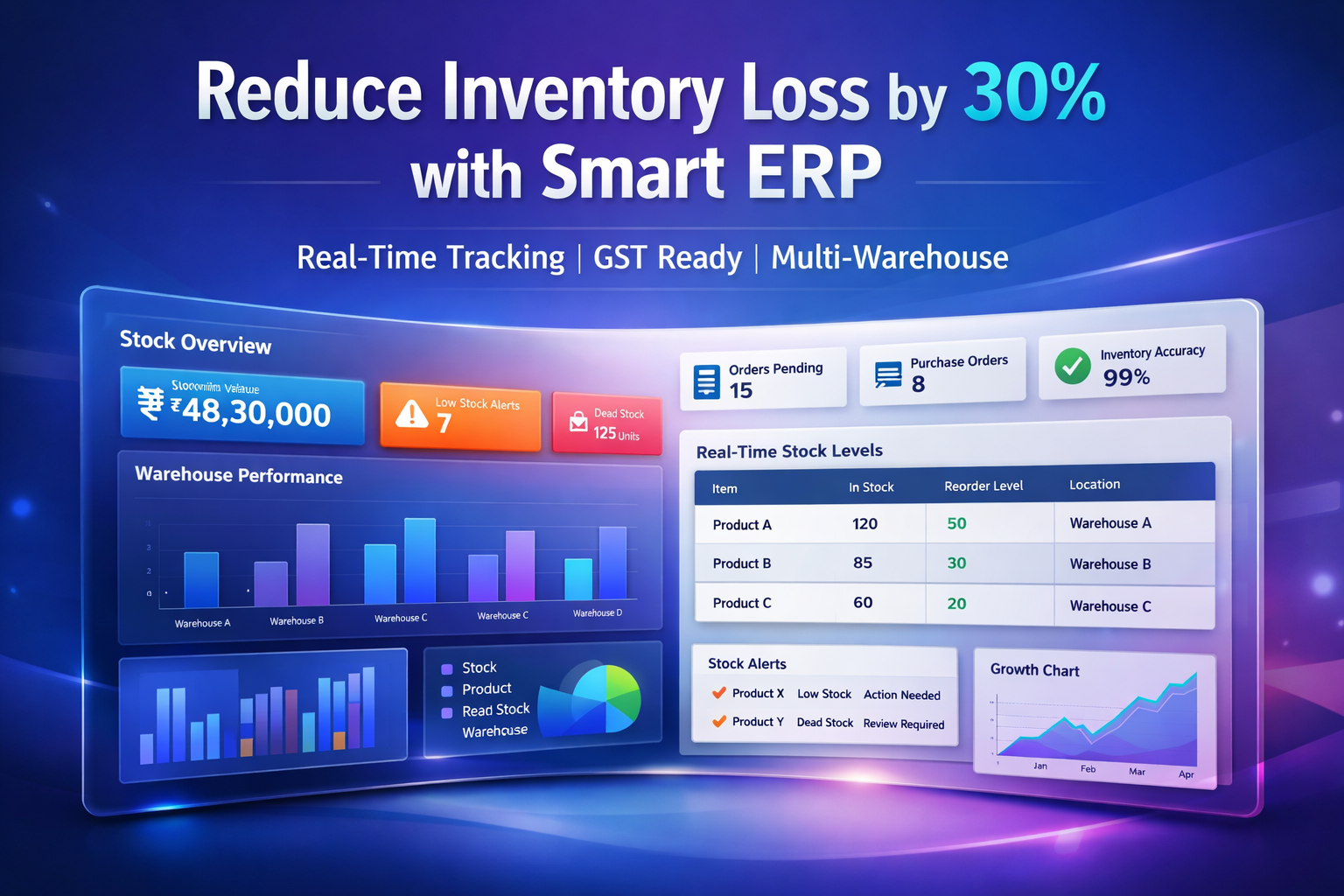
What Is the Best Inventory Management Software for SMEs in India?
The best inventory management software for SMEs in India combines real-time stock tracking, GST billing, barcode support, and multi-warehouse management — at a price that fits a growing business. Shivit Technologies’ ERP inventory module is purpose-built for this need.
If you run a small or mid-size manufacturing or trading business, manual spreadsheets are quietly costing you money. The right inventory management ERP in India replaces guesswork with live data — so you always know what you have, where it is, and what it costs.
Why SMEs in India Need Inventory Management Software in 2026
Most SME owners don’t realize how much they lose until they see the numbers. Here are the four silent killers of inventory health:
- Stock mismatch — Physical stock doesn’t match system records. Orders get delayed or cancelled.
- Dead stock — Unsold inventory piles up, locking cash for months.
- Manual errors — Spreadsheet mistakes cause wrong purchases, over-stocking, and billing disputes.
- Zero visibility — You can’t see stock levels across locations in real time.
10–30% of annual inventory value is lost by Indian SMEs due to poor stock tracking, dead stock, and manual errors. For a ₹2 Cr inventory business, that’s ₹20–60 lakh — every year.
If you’re facing even 2 of these issues, your inventory system is already costing you money every month — silently, in the background, every single day.
Cloud-based inventory management software for SMEs solves all of this in one place. It gives you live dashboards, automated alerts, and complete GST-ready billing — without hiring more staff. If this sounds like your current process, keep reading — the fix is simpler than you think.
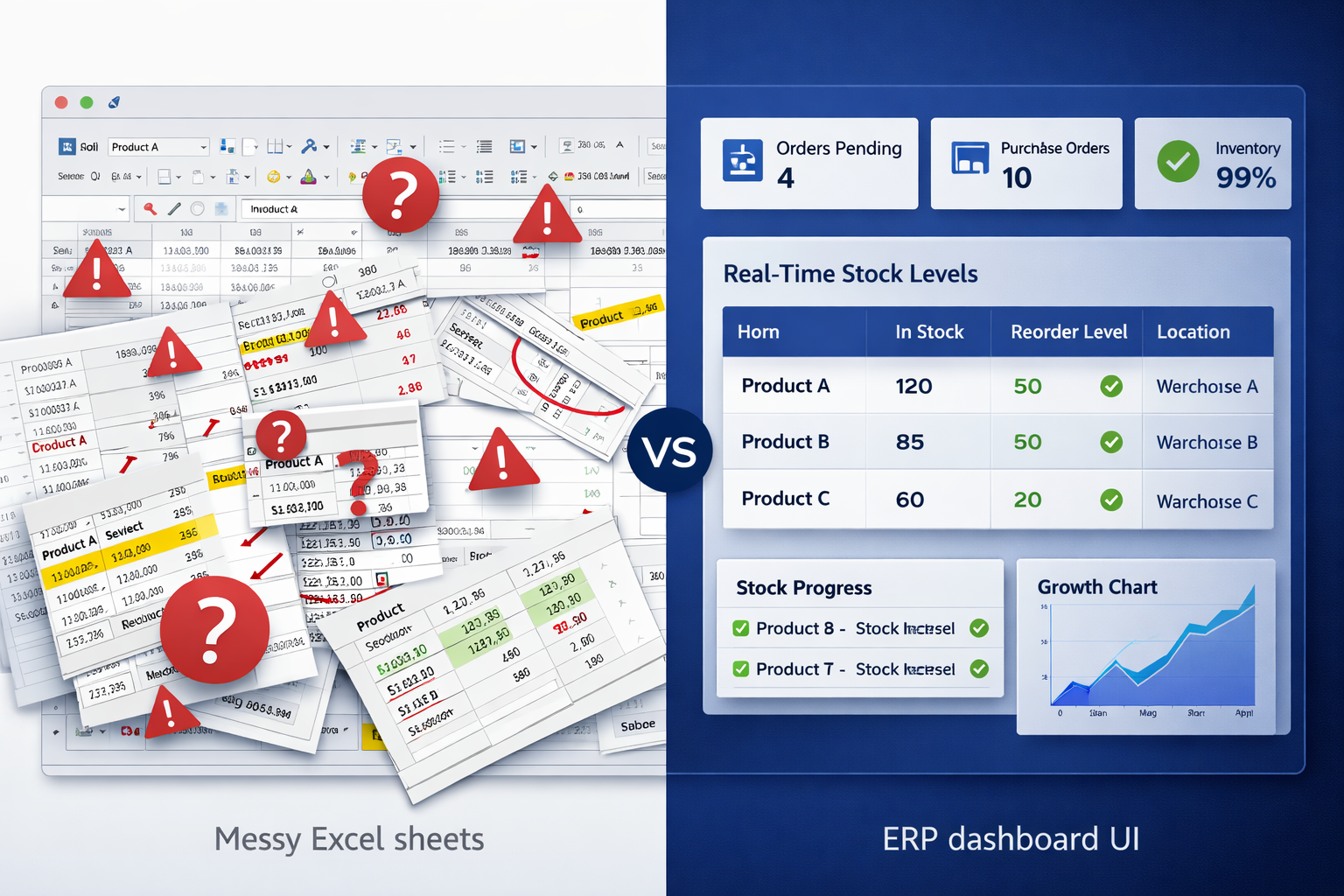
ERP vs Manual Inventory Tracking
Still on spreadsheets or a basic billing tool? Here’s what you’re missing:
| Feature | Manual / Excel | Basic Software | ERP Inventory Module |
|---|---|---|---|
| Real-time stock visibility | ✗ No | ✗ Partial | ✓ Yes |
| GST billing integration | ✗ No | ✓ Basic | ✓ Full |
| Barcode & scanning | ✗ No | ✗ Rarely | ✓ Yes |
| Multi-warehouse support | ✗ No | ✗ No | ✓ Yes |
| Procurement automation | ✗ No | ✗ No | ✓ Yes |
| Dead stock alerts | ✗ No | ✗ No | ✓ Yes |
| Custom reports | ✗ Limited | ✗ Limited | ✓ Fully custom |
| Scales with business | ✗ No | ✗ Partially | ✓ Yes |
ERP inventory software pays for itself by eliminating errors and stock losses that cost far more than the software subscription.
Most SMEs continue using Excel or basic tools until losses become visible — by then, it’s already too late. Don’t wait for a crisis to make the switch. This is where most SMEs lose money — and most don’t realise it until it’s reflected in their P&L.
Key Features to Look for in Inventory Management Software
When comparing ERP inventory software for small businesses in India, prioritize these features:
- Real-time stock tracking across all locations and warehouses
- GST-integrated billing — auto-calculate CGST, SGST, IGST on every invoice
- Barcode and QR scanning for fast, error-free goods receipt and dispatch
- Multi-warehouse management — view and transfer stock between locations
- Procurement and purchase order automation linked directly to inventory
- Dead stock and reorder alerts to prevent overbuying and stockouts
- Mobile access so managers can check stock from the factory floor or on the road
- Custom reports — stock aging, valuation, supplier performance, and more
Businesses using ERP inventory systems reduce stock errors by up to 30% within 90 days of going live.
Not sure where your business stands?Get a free inventory audit and identify hidden stock losses in under 30 minutes. No commitment required.
Pricing of Inventory Management Software in India
Without automation, errors keep compounding — and so does the cost of doing nothing.
Here’s a clear breakdown of inventory management system cost in India so you can plan your budget:
Basic Billing Tool
₹500–₹2,000/mo
- GST invoicing only
- Single location
- No warehouse mgmt
- No barcode support
- Limited reports
Mid-tier Inventory App
₹3,000–₹8,000/mo
- Basic stock tracking
- GST billing
- Single warehouse
- Basic barcode
- Standard reports
ERP Inventory Module
₹8,000–₹25,000/mo
- Full real-time tracking
- GST + barcode ready
- Multi-warehouse
- Procurement linked
- Custom reports
Choosing a cheaper tool without automation often costs more in inventory loss than investing in the right ERP. The real risk isn’t the price — it’s the losses you can’t see.
ROI perspective: If your business loses even ₹5 lakh/year to stock errors or dead stock, an ERP that costs ₹1–2 lakh/year pays for itself 2–5x over.
This is not a cost — it’s an investment that starts returning value from month one.
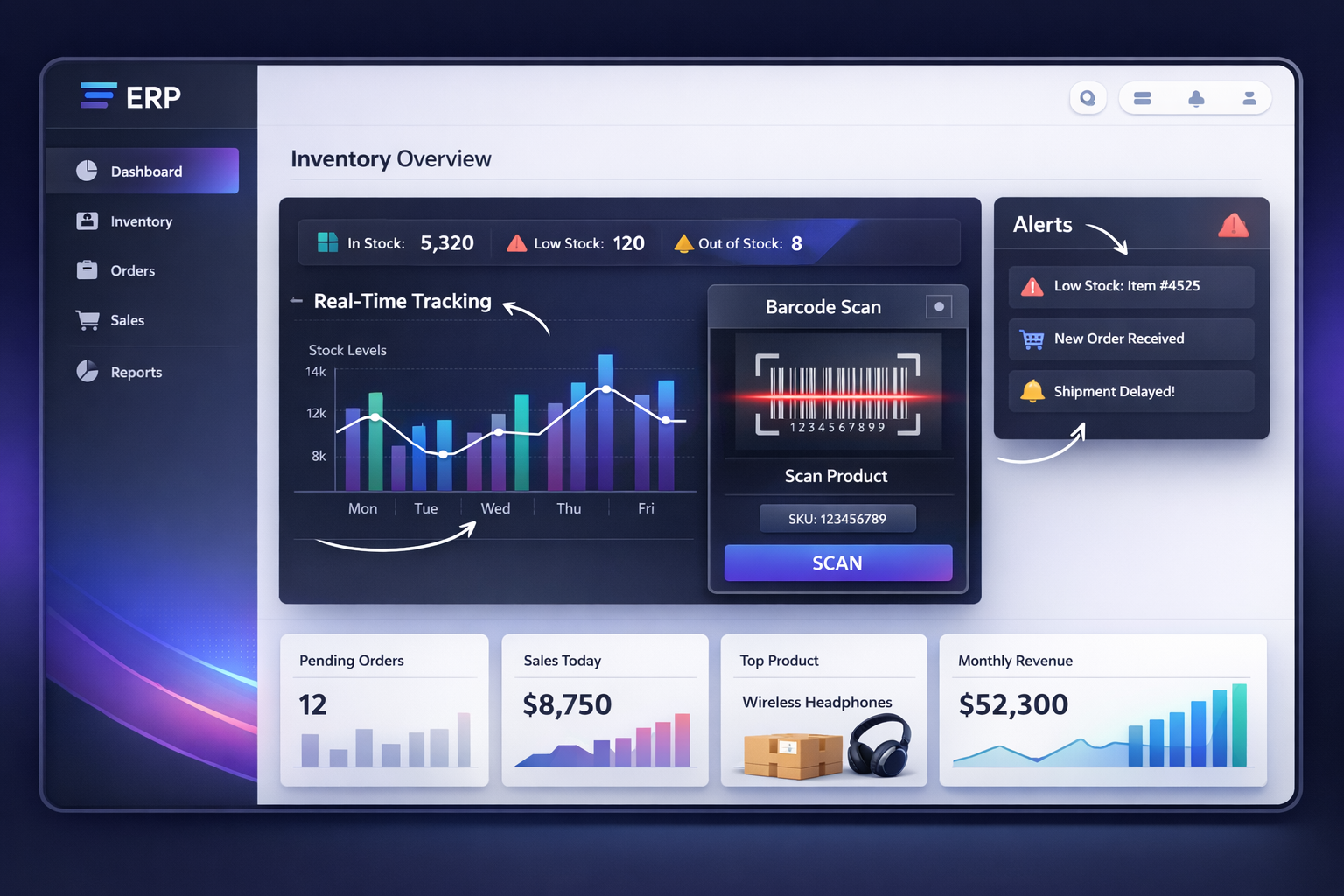
Who Is This Best For?
Factory Owners
Track raw materials, WIP, and finished goods across shifts. Stop production delays caused by missing stock.
Procurement Managers
Automate purchase orders, track supplier deliveries, and stay on top of reorder points — all in one system.
Operations Managers
Get live stock visibility across multiple warehouses. Make faster decisions with real-time dashboards.
How to Choose the Right Inventory Software
Use these five decision factors when evaluating cloud inventory management software for SMEs:
- Does it support GST and barcode out of the box? These are non-negotiable for Indian businesses.
- Can it handle multiple warehouses or locations? If you have even two storage points, you need this.
- Is it linked to procurement and accounts? Siloed inventory data creates blind spots and manual rework.
- Is it customizable for your industry? Generic software doesn’t understand manufacturing workflows.
- What does implementation and support look like? Fast onboarding and local support matter more than features you’ll never use.
Why Shivit Inventory ERP Is a Smart Choice
Shivit Technologies builds ERP for inventory and procurement in India that is designed specifically for SME operations — not enterprise giants.
- SME-focused design — built for businesses with 10–500 employees, not 10,000
- GST-ready from day one — fully compliant invoicing, e-way bills, and tax reports
- Multi-warehouse support — manage stock across factories, depots, and branches in one view
- Customizable modules — configure workflows for your industry: trading, manufacturing, or distribution
- Real-time tracking — live dashboards so your team always has accurate stock data
- Procurement integration — purchase orders, supplier management, and GRN linked to inventory automatically
Trusted by SMEs across Delhi NCR, Mumbai, and Ahmedabad — helping businesses reduce stock loss and gain full inventory control within 90 days of go-live.
Frequently Asked Questions
What is the best inventory management software for SMEs in India?
The best option combines GST billing, barcode scanning, real-time tracking, and multi-warehouse support. Shivit Technologies’ ERP inventory module is designed specifically for Indian SMEs with exactly these features at a competitive price point.
How much does inventory management software cost in India?
Basic billing tools start at ₹500–₹2,000/month. Mid-tier apps range from ₹3,000–₹8,000/month. A full ERP inventory module typically costs ₹8,000–₹25,000/month depending on users, modules, and customization. Most SMEs recover this cost within 6–12 months through reduced stock losses.
Which inventory software has GST and barcode features?
Not all tools offer both. Shivit’s ERP includes fully integrated GST billing (CGST, SGST, IGST, e-way bills) along with barcode and QR code scanning for goods receipt and dispatch — standard, not as an add-on.
Which ERP is best for inventory management in small business?
Look for an ERP that is built for SMEs, not scaled down from enterprise software. Shivit Technologies focuses exclusively on SME operations — so onboarding is faster, support is local, and the software fits your workflow without heavy customization.
How does inventory ERP reduce stock loss and dead stock?
ERP systems set automatic reorder alerts, track stock aging, and flag slow-moving items before they become dead stock. Real-time visibility eliminates ghost stock and manual counting errors — the two biggest causes of inventory loss in SMEs.
Can I get a demo of cloud ERP inventory software in India?
Yes. Shivit Technologies offers a free 30-minute consultation and live demo tailored to your business type. You’ll see exactly how the system handles your specific inventory challenges — no generic slideshow.
How do I choose inventory management software for my manufacturing SME?
Prioritize GST compliance, barcode support, multi-location tracking, and procurement integration. Avoid generic tools that don’t understand manufacturing workflows. Ask vendors for SME references and check how fast they can get you live.
Trusted by growing SMEs across Delhi NCR, Mumbai, and Ahmedabad — businesses that have improved inventory control, reduced stock loss, and freed up working capital within 90 days of going live with Shivit ERP.
Only 10 slots available this month · Free · No commitment
Get Your Free Inventory Audit & Cost Reduction Plan
In 30 minutes, you’ll know exactly:
- Where you are losing inventory value right now — with specific numbers
- How to reduce stock loss by 20–30% within 90 days of going live
- Which ERP setup fits your business size, industry, and budget
Book Your Free 30-Minute Consultation →
Slots fill fast. We work with only 10 SMEs per month to ensure quality. Secure yours today.